


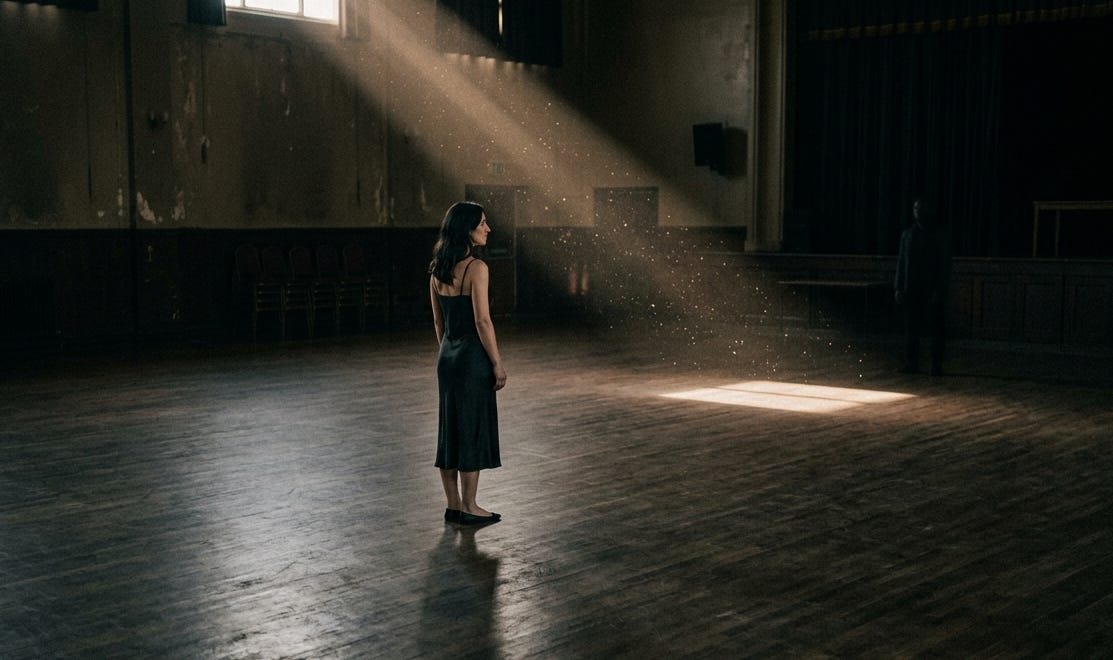
There is a particular dynamic that almost every couple is doing some version of, regardless of whether they have a name for it yet. One partner reaches, the other pulls away, and the harder either one tries to fix what is happening between them the worse it seems to get. It shows up under different names in different decades, pursuer and distancer, anxious and avoidant, but the dance underneath the language stays the same, and once you know what to look for you start to see it almost everywhere.
This is the most common dynamic in modern relationships, and the strangest part of how common it is, is how poorly it is described. The frameworks we have are accurate at the level of what you can see from the outside. One reaches. The other pulls. The pattern repeats. But none of them tell you what is actually happening inside the bodies of the two people in that conflict, why each of them is doing what they are doing, and why both of you, in the middle of a moment you both want to end, find yourselves doing exactly the wrong thing at exactly the same time without being able to stop.
If you have ever lived this dance from either side, you already know that no description from above has ever quite reached the place where it actually lives. I want to tell you what is happening inside, because I have lived both sides of it over the years, and almost nothing I have read describes either one in a way that matches what I have actually felt in my own body.
Inside the Body That Pulls Away
From the outside this looks like detachment, the kind of cold checked-out absence that makes the other partner feel like they are talking to someone who is no longer participating in the relationship. From the inside it is something almost unrecognizable to that description.
When conflict arrives, the avoidant body floods with anger and hurt at the same time, and the chest begins to tighten in a way that is hard to describe to anyone who has not felt it. There is a constriction near the heart that is almost physical, a bracing the body does without asking permission, and then a war begins, inside the body, between the part that wants to engage and the part that has already begun to shut down. Underneath the war are all the older fears, activating at once, the fear of failing the relationship and the fear of being rejected and the fear of being seen as inadequate, and underneath those, the most painful piece of it: no capacity at all to access the heart, which is the very thing the conversation is asking the avoidant to reach for. The part of them that could love the person across from them is locked in a place they cannot get to, and they are at war with themselves, and they are losing the war.
There is something else running alongside all of this that almost nobody describes, and it is simpler and more physical than the war itself. The urge to leave. To get up, to walk out, to put your body somewhere else, because being here is becoming more than the body knows how to hold. The signal arrives over and over with the same instruction: this is too much, you need to leave, you cannot survive staying in this. And so most of the conflict, for the avoidant, is happening on two levels at once. There is the conversation you are technically still in. And underneath that, a quiet negotiation with your own legs, trying to convince them not to move, trying to keep yourself physically present while every part of you is asking to be allowed to disappear.
The space the avoidant pulls into when they finally do create some distance is not the refuge it looks like from outside. It is a cage, and at the bottom of that cage, in the worst moments, an impulse arrives that is the most misunderstood part of avoidance: the urge to sink the boat. The desire to end the relationship itself, not because it has failed but because it has become the source of an unbearable feeling, and some part of you, desperate and out of options, wants to end the source so the feeling can finally stop. That impulse is not rational and it is not strategic, it is the cornered response of a nervous system that has run out of any other way to make the pain end.
From the outside, all of this looks like a person who has stopped caring. From the inside it is drowning, and the avoidant cannot even tell you it is drowning because their throat has closed and their thinking has gone offline and the very capacity to describe what is happening is the first thing the cage takes away.
Inside the Body That Reaches
From the outside this looks like need, like the kind of too-much that makes the other partner want to step back, like a person who cannot regulate themselves and is asking for something the other does not have to give. From the inside it is something quieter and more devastating than need, and the closest word for it is despair.
When the anxious body senses the other person beginning to pull away, what arrives is not a desire for attention or a strategy to extract reassurance, it is the painful immediate certainty that the connection you depend on is disappearing, and that you have a small window of time to do something about it before it is gone entirely. The relationship is happening in front of you and somehow the person you love has become unreachable, and the wall between you is invisible and you cannot find a door in it, and every part of your body is responding to that with the same conviction, which is that if you do not close this gap now something you cannot live without is about to disappear.
So the anxious body reaches, asking for reassurance, trying to bring the partner back, doing whatever the moment seems to call for that might dissolve the despair before it becomes unbearable. And the despair will not dissolve, because the more the anxious partner reaches, the further away the other one seems to go, which produces more despair, which produces more reaching, and the anxious partner cannot stop because stopping means sitting alone with the conviction that the love is leaving and there is nothing left for them to do about it.
From the outside this looks like pursuit. From the inside it is the painful certainty that you are losing something you cannot survive losing, and the reaching is the only thing standing between you and that loss.
The Despair That Runs Underneath Both
Here is something almost no framework names. Both partners in this dance are in despair, they are simply in different versions of it, and the despair is the through-line that connects what otherwise looks like two opposite experiences.
The avoidant in the cage feels a despair that is internal and turned toward the self, the despair of being unable to do what the relationship is asking of them in this moment, of the gap between who they want to be and who they actually are when the intensity arrives, of watching themselves lose a war they desperately want to win and having no idea how to. The anxious partner feels a despair that is relational and turned toward the other, the despair of reaching for someone who keeps disappearing, of being in the same space as the person they love and somehow unable to make contact, of trying so hard to hold something that keeps slipping out of their hands.
Both are the same despair wearing different clothes.
It is the conviction that something essential is unreachable and that the very reaching, whether inward or outward, is failing. The avoidant cannot reach themselves. The anxious cannot reach the other. And both of them, in that moment, are convinced with the kind of certainty that does not require evidence that the situation they are in cannot be repaired from inside the conversation they are having.
What Each One Sees on the Other Side
This is where the trap completes itself, and where the misreading that drives the entire dance happens.
The anxious partner watches the avoidant pull away and interprets it as not caring, as coldness, as proof that the love is in the process of disappearing, and the body responds to that interpretation with the only available action it knows: reach harder, fight for the connection, do whatever might bring the love back before it is gone. But the avoidant pulling away is not absence of caring, it is the body’s response to caring too much. The withdrawal you are seeing is not detachment, it is overflow. The flat face is a face holding more feeling than it can manage. The silence is not the absence of emotion, it is a body that has gone offline because there is too much emotion in the moment, not too little. The avoidant is not leaving because they have stopped loving you, they are leaving because the loving has become more than a system that never learned how to stay inside intensity can hold.
On the other side of the same moment, the avoidant feels the anxious partner reaching and reads it as accusation, as pressure, as further proof that they are failing to be what the relationship needs. The reaching arrives as more weight on a body that already cannot hold what it has, and the response is automatic and almost involuntary, which is to pull further into the cage, to find more space, to try to get below the level where the reaching can reach. But the anxious partner’s reaching is not accusation, it is desperation. The reaching is the body trying to gather evidence that the love is still there before the despair becomes unbearable, and the pursuit the avoidant feels as pressure is the survival response of someone who is convinced they are about to lose what they cannot survive losing.
Two interpretations, both absolutely confident and both absolutely wrong about the person on the other side, and each one producing exactly the response that confirms the other’s worst fear. The avoidant’s withdrawal confirms for the anxious that the love is leaving. The anxious partner’s reaching confirms for the avoidant that they are failing the relationship. The dance completes itself again, and neither of them ever quite reaches the dancefloor where actual connection is possible.
The Fear Underneath Every Surface
If you watch this dance from a slight distance, you can see something neither person inside it can see clearly, which is that underneath every reactive surface in the dance is a specific fear, and that fear is almost always older than the relationship itself.
Behind the avoidant’s withdrawal there is usually fear of failing, fear of being inadequate, fear of being the source of someone else’s hurt and not knowing how to repair it. The withdrawal is not refusal to engage, it is the body of someone who is convinced that whatever they do next will make it worse, so doing nothing feels like the safer option even though it turns out to be the most damaging thing they could do. Behind the anxious partner’s reaching there is usually a single fear, simpler in shape but no less devastating in weight: the fear of being left alone with the proof that you were not worth staying for. The reaching is not pursuit of attention, it is the body trying to outrun the conviction that the love was always going to leave eventually, and this might be the moment.
Both of these fears are old, both were installed in childhoods long before the relationship existed, and both surface in this particular dance because the dance touches the exact wound each person spent their early life trying to protect.
What the Dance Is Actually About
Two children, in adult bodies, trying to protect themselves from the same wound in opposite directions. That is the most accurate description of what is happening when this dynamic completes itself, and it is the description that makes the dance finally make sense.
The avoidant child learned somewhere along the way that emotional intensity was unsafe, that being affected by what other people brought to them led to consequences they had no way to manage, and so the adult body now pulls away from intensity, including the intensity of being loved. The anxious child learned somewhere along the way that connection was unreliable, that the people they needed were not always able to be there in the way they needed them to be, and so the adult body now reaches for connection, including connection that is right in front of them, because the reaching is the only way to be sure the love is still real.
Both of these responses made complete sense in the environments where they were learned, and both of them are running in environments where they no longer fit. Neither response can be argued with from the inside of the dance because they are not living in the part of the body that listens to arguments. They are living in the part that decided what was safe long before either of you had any say in the matter.
The dance is not a sign that you are incompatible. It is not a sign that one of you is too much or the other too little. It is the meeting of two old wounds that have organized themselves into adult relational strategies, and that find each other in conflict because conflict is the moment when both wounds get closest to the surface and neither of them knows what to do with the other.
If you recognize this dance from either side, the most important thing to understand is that the person across from you in the middle of the conflict is not who you think they are. The avoidant who looks cold is not cold, they are drowning in feeling that has nowhere to go. The anxious partner who looks like too much is not too much, they are afraid of losing you and unable to find any other way to say so. The story you are telling yourself about what they are doing is almost always wrong, because the story is being told by a part of you that is also in survival, and survival has never been a state in which accurate readings of other people happen.
You do not have to escape this dance entirely, and you do not have to become someone whose nervous system never reacts. What changes things is being able to see the dance for what it is, even briefly, even imperfectly, in the middle of the moment when both of you are misreading each other. That recognition does not require both partners to do it at the same time, and one person seeing the dance clearly enough to soften their interpretation of the other can change the choreography in ways that surprise both of you.
The dancefloor exists. You just have to stop dancing in opposite directions long enough to find it together.
• • •
If you recognize this dance in your relationship and want to understand what is driving it on your side specifically, this is the work I do.
You can book a complimentary call and we will look at it together.
If this one stayed with you, share it with someone on either side of the dance who has never been told what is actually happening inside the other person’s body.
About Eric
Eric Bensoussan is a relationship coach and nervous system specialist with 13 years of experience helping couples move beyond surface-level communication into embodied vulnerability. His work focuses on breaking recurring relationship patterns through nervous system regulation rather than traditional talk therapy approaches. He writes on Substack and sends weekly insights through The Relationship Reimagined Letter.